Change region
 United States
 Canada
 Australia
 New Zealand
 South Africa
 Saudi Arabia
 United Arab Emirates
 Kuwait
 Qatar
 Nigeria
 Cyprus


Quick answer: "co op cranbrook" most likely refers to Co-op. The Co-op is a member-owned business with food shops, funeral care, insurance and legal services. Below: what to check, what it costs to shop there and where to find the current details.
Last updated: November 2026. Prices, offers and store details change often, so treat anything here as a snapshot and check the official source before you buy.
If you want cranbrook from Co-op, "co op cranbrook" is the search, and here's the plain guide. I can't see live stock or prices, so I'll focus on what helps you decide.
The short version on Co-op
The Co-op is a member-owned business with food shops, funeral care, insurance and legal services. Around 4.5 million people are members according to trade reports. The Co-operative Bank is a separate business: Coventry Building Society completed a £780 million takeover of it on 1 January 2025.
What to know about Co-op
With Co-op, it pays to check the basics before you commit: the price including delivery, the returns policy, the warranty on bigger items, and whether there's a cheaper own-brand alternative. A quick look at the reviews on a site that isn't the retailer's own gives you a more balanced view.
Co-op ended its points-style rewards and put the effort into Member Prices on about 300 everyday lines, the same in the Co-op's own online shop. Reports say Member Prices also run on Deliveroo, Uber Eats and Just Eat if you add your membership number. One aggregator says membership costs a one-off £1.
Co-op delivers through its own online shop and through Deliveroo, Uber Eats and Just Eat.
| Check | What to do |
|---|---|
| Official site | coop.co.uk is the source for current prices, offers and policies |
| Delivery and collection | Check fees and minimum baskets at checkout |
| Returns | Know the window before you buy; legal rights apply regardless |
| Loyalty | Check whether the price needs a card or app |
Tips that save money and hassle
If you shop in several places, a cashback site or a loyalty app can help, but don't chase points. Spending £30 more to earn £1 back is a bad deal. Only use schemes that match what you'd buy anyway, and check the terms for expiry dates, because points and vouchers often disappear after a set period.
Look for discounts you might be missing. Students can often get money off through UNiDAYS or Student Beans, NHS staff and emergency-service workers can get the Blue Light Card, and some retailers run over-60s days or teachers' discounts. They're free to check, and a ten per cent saving on a big purchase is worth the two minutes it takes.
Fake reviews are a real problem online. The Digital Markets, Competition and Consumers Act 2024 banned fake reviews and 'drip pricing' (hiding compulsory fees until the end), with the main consumer rules coming in from April 2025. In practice, that means the price you see should include unavoidable fees. If it doesn't, screenshot it and complain to the retailer and Trading Standards through Citizens Advice.
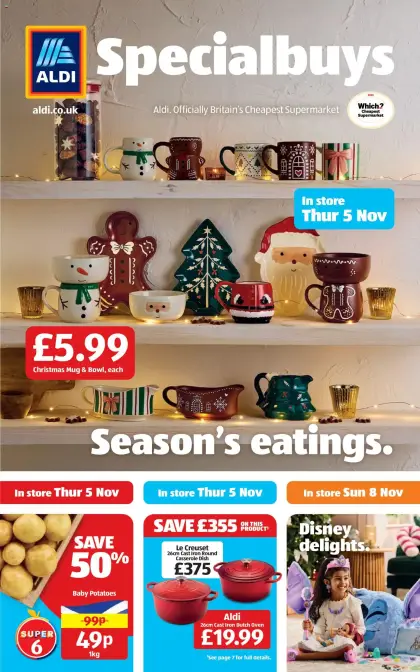
Check the unit price on food and household shopping. UK shops have to show a price per kilo, litre or unit on most goods, which lets you compare a big pack with a small one. Bigger isn't always cheaper, and multi-buy deals sometimes work out dearer than two single packs elsewhere. If the Co-op offers are not quite what you need, it is worth comparing them with the latest Aldi leaflet and the current Asda leaflet before you decide.
If your parcel goes missing, it's the seller's problem, not yours. Under the Consumer Rights Act, goods stay at the seller's risk until you or someone you've nominated physically takes possession of them. If the courier says 'delivered' and it isn't there, check with neighbours first, then tell the retailer in writing and ask for a replacement or refund.
Own-label products are often the best value, and consumer groups such as Which? have repeatedly found supermarket own brands to be cheaper than branded equivalents, sometimes by a wide margin, with taste tests going either way. Try the own-label version of the things you buy most often. If you can't tell the difference, you've found a permanent saving.
Be careful about buy-now-pay-later. Interest-free instalments can be handy, but missed payments can bring fees and mark your credit file. Unregulated products may not give you the full protections of regulated credit, and the rules are changing, so read the terms and only use it for things you'd have been able to afford anyway.
Allow a bit of time for big purchases. Measure twice, read the returns policy, check how the item will be delivered and who will take away the old one. A little preparation avoids the classic problem of a new sofa that won't fit through the front door.
Trading Standards deals with misleading adverts, unsafe products and rogue traders, and you report issues through the Citizens Advice consumer service. If you think a shop has broken the rules, you don't have to take it on alone. Keep evidence: screenshots, receipts, emails and dates.
Consumer rights are worth knowing off by heart. If something you've bought turns out faulty, the Consumer Rights Act 2015 gives you a 30-day right to reject it for a refund, and after that the retailer generally gets one chance to repair or replace it. Goods must be of satisfactory quality, fit for purpose and as described, and any 'no refunds' sign doesn't take that away. Citizens Advice has a free consumer service on 0808 223 1133 if a seller won't play ball.
Scams love big brand names. If you get a text or email about a missed delivery, a prize, or a 'reward' from a shop you use, don't click the link. Type the retailer's address yourself or use its app. You can forward dodgy texts to 7726 for free, and suspicious emails to report@phishing.gov.uk. If you've already handed over card details, ring your bank straight away on the number on the back of your card.
Timing matters. Prices on bigger purchases tend to dip around January, in the summer lull and around Black Friday, and groceries have their own cycle with weekly offers. If you can wait, note the price today, set a reminder, and look again in a fortnight. A little patience beats paying the first price you see.
Frequently asked questions
What is Co-op?
The Co-op is a member-owned business with food shops, funeral care, insurance and legal services.
Is Co-op worth using?
It depends on what you buy and how often. Compare prices and check the returns terms.
Where can I check current details?
On the official site, coop.co.uk, which is the source for prices, offers and policies.
Sources
- The Grocer, Co-op ends rewards benefits to focus on Member Prices: www.thegrocer.co.uk
- Mortgage Soup, Coventry BS completes Co-operative Bank acquisition: mortgagesoup.co.uk
- Retail Gazette, Co-op rolls out member prices online: www.retailgazette.co.uk
- Citizens Advice, consumer rights: citizensadvice.org.uk
- GOV.UK, Consumer Rights Act 2015 guidance: gov.uk