Change region
 United States
 Canada
 Australia
 New Zealand
 South Africa
 Saudi Arabia
 United Arab Emirates
 Kuwait
 Qatar
 Nigeria
 Cyprus

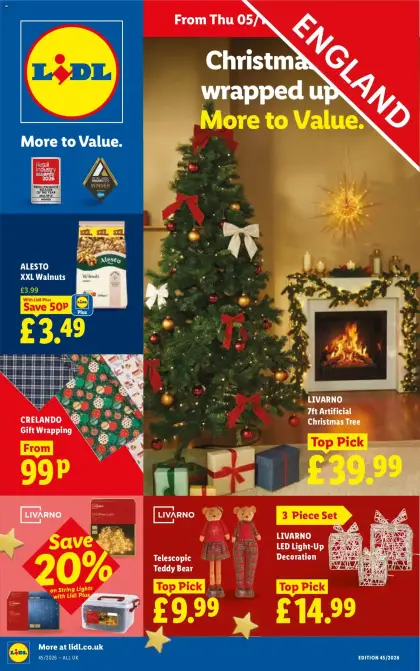
Quick answer: "lidl tollcross" most likely refers to Lidl GB. Lidl is a German discount chain. Below: what to check, what it costs to shop there and where to find the current details.
We last updated this in November 2026, but prices, offers and store details tend to shift regularly, so treat what's written as a snapshot and give the official source a once-over before you spend.
You searched "lidl tollcross", which tells me you want tollcross from Lidl GB, or want to know if Lidl GB even sells it. Here's what you should know before you buy, and how to get the best price.
The short version on Lidl GB
The German discount retailer Lidl recorded an 8.8% share of the UK market in the 12 weeks to mid-June 2026, edging past Morrisons' 8.5% and taking fifth place. Its private-label line-up features Parkside (tools), Silvercrest (kitchen gadgets), Livarno (home), Lupilu (baby) and Playtive (toys).
What to know about Lidl GB
There's a lot of choice at Lidl GB, so the most useful thing is to decide what you want first. Look at the range on the official site, check reviews from people who've bought the exact thing, and compare with one other retailer. That takes ten minutes and often saves a tenner or more. If the Lidl offers are not quite what you need, it is worth comparing them with the latest Aldi leaflet before you decide.
Lidl Plus is the free app. Coupon Plus was withdrawn on 5 May 2026 and replaced with Lidl Plus Points: 1 point per £1 spent in store, swapped for coupons inside the app.
Lidl isn't known for grocery home delivery like the big four, so check lidl.co.uk for any online non-food sales and the delivery terms.
| Check | What to do |
|---|---|
| Official site | lidl.co.uk is the source for current prices, offers and policies |
| Delivery and collection | Check fees and minimum baskets at checkout |
| Returns | Know the window before you buy; legal rights apply regardless |
| Loyalty | Check whether the price needs a card or app |
Tips that save money and hassle
When a big retailer sends you a text or email about a missed delivery, a prize or a 'reward', it’s likely a scam, so steer clear of the link. Go straight to the retailer’s website by typing the address yourself or open its app. You can forward any sketchy texts to 7726 for free and send suspicious emails to report@phishing.gov.uk. If you’ve already handed over card details, call your bank right away using the number on the back of your card.
Timing matters. Prices on bigger purchases tend to dip around January, in the summer lull and around Black Friday, and groceries have their own cycle with weekly offers. If you can wait, note the price today, set a reminder, and look again in a fortnight. A little patience beats paying the first price you see.
Don't forget to hold onto the paperwork: save the order confirmation, photograph the receipt, write down the model and serial number of any electrical items, and record the name of the rep you spoke to when you call customer services. It’s just a minute and can turn a returns nightmare into a proper quick refund.
Take a look at the overall expense rather than the headline price alone. Delivery fees, service charges, subscription fees, extended warranties and optional protection plans can push the price up dramatically. On cheaper products, warranties usually don’t add value, as the Consumer Rights Act already provides proper coverage for a fair period.
If the price looks too good to be true, you ought to verify who’s actually selling the item. On many sites the seller is a third-party, so your contract is with them, not the marketplace itself. Have a look at the seller's rating, their returns policy and where the item ships from, since overseas sellers can cause customs delays and make returns a right faff.
Under Section 75 of the Consumer Credit Act 1974, any credit-card spend from £100 to £30,000 means the card issuer is jointly liable with the seller if it all goes wrong, and you can still pay the full amount each month to keep interest off the table.
If you’re hitting a few different stores, a cashback site or loyalty app can be a bit of a faff, but don’t chase points. Spending £30 more to earn £1 back is a bad deal. Only go for schemes that match what you’d buy anyway and read the terms for expiry dates, because points and vouchers often vanish after a set period.
Look for discounts you might be missing. Students can often get money off through UNiDAYS or Student Beans, NHS staff and emergency-service workers can get the Blue Light Card, and some retailers run over-60s days or teachers' discounts. They're free to check, and a ten per cent saving on a big purchase is worth the two minutes it takes.
Fake reviews are a bit of a faff online, yet the Digital Markets, Competition and Consumers Act 2024 has banned them and also outlawed 'drip pricing', where hidden fees sneak in at the end. The core consumer rules start in April 2025, meaning the price displayed should already include any mandatory fees. If it doesn’t, grab a screenshot and lodge a complaint with the shop and Trading Standards through Citizens Advice.
While you’re picking up food and household supplies, keep an eye on the unit price. UK stores have to show a price per kilo, litre or unit on most items, which helps you compare a big pack with a small one. Yet bigger isn’t always a proper bargain, and a multi-buy deal can end up costing more than two single packs from another retailer.
If your order goes missing, that’s the seller’s issue, not yours. The Consumer Rights Act states the goods remain at the seller’s risk until you or someone you’ve nominated physically receives them. When the courier says it’s been delivered but you can’t find it, start by asking the neighbours, then write to the retailer for a replacement or a refund.
From my experience, supermarket own-label goods usually give the best value and Which? has repeatedly shown they’re cheaper than the branded versions, sometimes by a massive margin, though taste tests can go either way. Try the own-label version of your regular buys and, if it tastes the same, you’ve scored a permanent discount.
A word of warning about buy-now-pay-later: interest-free plans are handy, yet missing a payment brings fees and can scar your credit record. Unregulated options don’t carry the full protections of regulated credit and the rules keep shifting, so give the terms a proper look and only use them for purchases you could've bought outright.
Frequently asked questions
What is Lidl GB?
Lidl is a German discount chain.
Is Lidl GB worth using?
Your choice and purchase frequency matter, so make sure you compare costs and read the returns terms.
Where can I check current details?
On the official site, lidl.co.uk, which is the source for prices, offers and policies.
Sources
- Lidl GB, Lidl Plus points: lidl.co.uk
- MoneySavingExpert, Lidl loyalty shake-up: moneysavingexpert.com
- Pulse, Lidl overtakes Morrisons: www.pulse.bot
- Citizens Advice, consumer rights: citizensadvice.org.uk
- GOV.UK, Consumer Rights Act 2015 guidance: gov.uk